
Applying for a UAE visa involves more than submitting an application and waiting for approval. Whether you are planning a short visit, moving to Dubai for work, joining a family member, or applying for a residence visa, your application must meet the requirements set by the relevant UAE immigration authority.
A UAE visa rejection can disrupt travel plans, delay employment, and create uncertainty about what to do next. However, a rejected application does not automatically mean you are permanently prohibited from entering the country. In many cases, applicants can address the underlying issue and submit a fresh application.
Understanding the common UAE visa rejection reasons can help you avoid repeated mistakes. This guide explains why applications may be refused, how to check your visa status, and what steps to take if your Dubai visa is rejected in 2026.
Quick Answer: Why Does a UAE Visa Get Rejected?
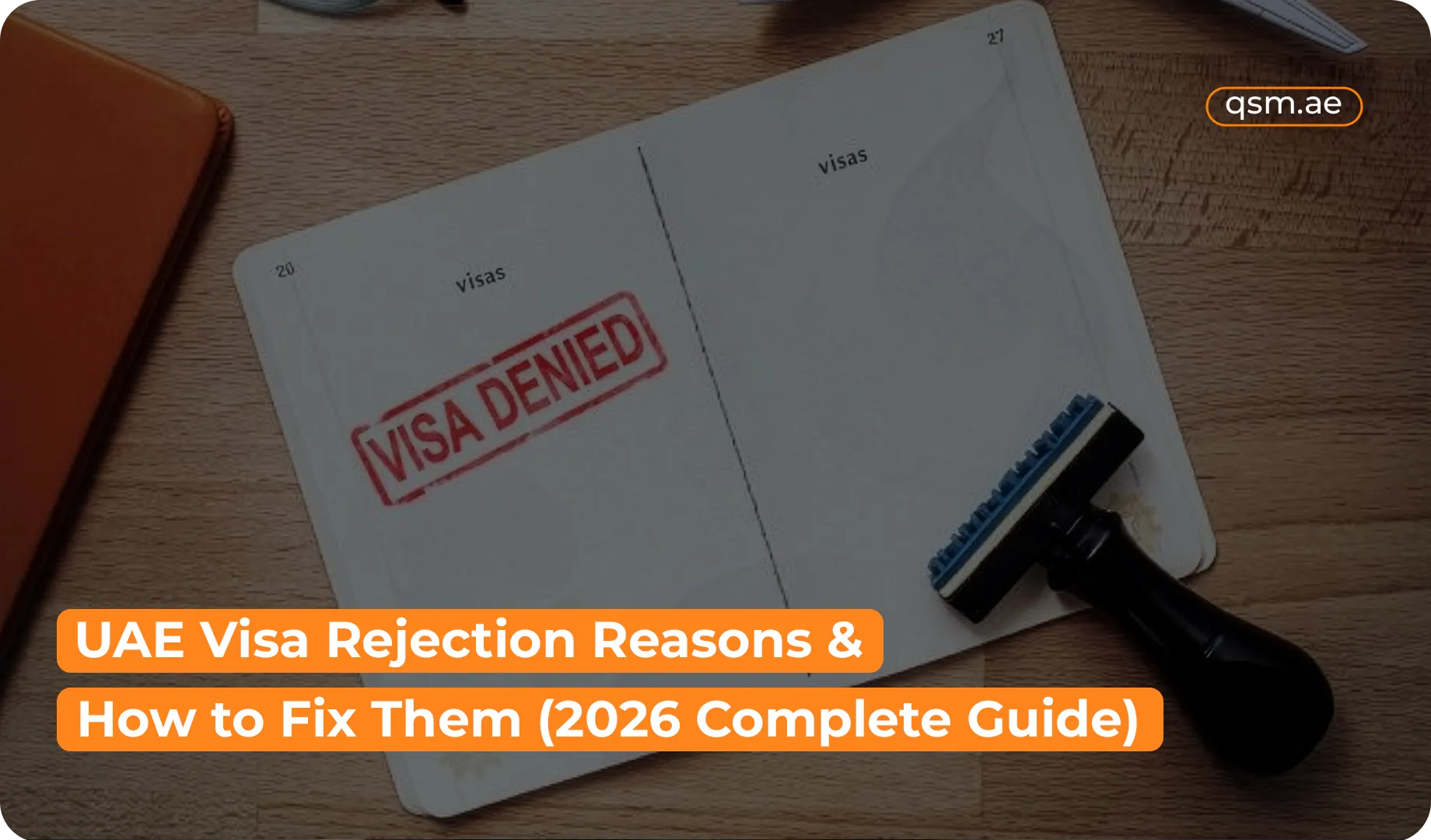
A UAE visa application may be rejected because of incorrect documents, passport validity issues, incomplete information, previous immigration violations, unpaid fines, sponsor-related problems, medical fitness concerns, or security-related checks.
If your visa is rejected, first identify which authority processed the application and ask the sponsor or application provider for the rejection details. Correct the underlying issue before submitting another application. A rejection does not necessarily mean you cannot apply again.
10 Common UAE Visa Rejection Reasons
The immigration authorities assess applications according to the applicant’s circumstances, visa category, supporting documents, and applicable regulations. The following are common issues that applicants should check.
1. Incorrect or Incomplete Documents
Missing, unclear, expired, or inconsistent documents can affect a visa application. Even a small difference between the information on your passport and application form may create complications.
For example, an incorrect passport number, spelling difference in your name, missing photograph, or incomplete supporting document can delay processing or result in refusal.
How to fix it:
- Check that all personal details match your passport.
- Upload clear, readable copies of the required documents.
- Confirm that photographs meet the applicable specifications.
- Review the document checklist for your specific visa category.
2. Passport Validity Issues
Passport validity is an important eligibility requirement. Many UAE entry permit and tourist visa categories require a passport with at least six months of validity from the date of entry.
If your passport is close to expiry, damaged, or contains inconsistent information, your application may face problems.
How to fix it:
Check your passport’s expiry date before applying. If it does not meet the validity requirement for your visa category, renew it first and submit the application using the updated passport details.
3. Previous UAE Visa or Immigration Issues
An earlier UAE visa that has not been properly cancelled or closed may affect a new application. Previous overstay violations, unresolved immigration fines, or other immigration records can also create complications.
This is particularly important for people changing employers, moving from a visit visa to another visa category, or applying for a new residence permit.
How to fix it:
Check whether your previous visa cancellation process has been completed and whether any outstanding fines or immigration matters remain unresolved
4. Unpaid Fines or Legal Issues
Outstanding immigration fines, unresolved legal matters like an active absconding case, or restrictions recorded against an applicant may affect visa processing.
For instance, an applicant who overstayed a previous visa may need to settle the relevant penalties and resolve their immigration status before applying again.
How to fix it:
Check your records through the appropriate government authority. If you have an outstanding fine or legal restriction, seek clarification about the steps required to resolve it. Do not submit another application until you understand whether the issue has been cleared.
5. Previous Visa Rejection History
A previous visa rejection does not automatically result in another rejection. However, submitting repeated applications without correcting the original problem can lead to the same outcome.
If your Dubai tourist visa was rejected previously, reviewing the earlier application is a better starting point than immediately applying through another provider.
How to fix it:
Review your previous application details, check for incorrect information, and identify any missing documents. If the reason is unclear, ask the original application provider or relevant authority for clarification.
6. Sponsor or Employer-Related Problems
For employment and family residence visas, the sponsor also plays an important role in the application process.
An employer’s licensing or establishment status, eligibility conditions, documentation, or other compliance issues may affect an application.Family sponsorship applications, such as a spouse visa or parent visa, must also meet the applicable income, accommodation, and relationship-document requirements.
How to fix it:
Ask the employer or family sponsor to verify their eligibility and documentation before submitting a fresh application. For employment visas, the employer’s authorised representative or PRO can help identify issues with the establishment or work permit process.
7. UAE Visa Rejected Due to Security Reasons
Some applicants receive a rejection without a detailed explanation. In certain cases, the decision may relate to security or background checks conducted by the relevant authorities.
The phrase UAE visa rejected due to security reasons does not necessarily explain the specific issue. Security screening criteria and individual case details are not generally available for applicants to assess independently.
How to fix it:
Contact the relevant immigration authority through its official enquiry channels and ask whether additional information can be provided. If the matter involves a legal restriction or complex immigration record, consider seeking qualified legal assistance.
Avoid submitting repeated applications or relying on unofficial claims that a security-related rejection can be removed through a guaranteed process.
8. UAE Visa Rejection: Medical Reasons
Medical fitness requirements generally apply to applicants seeking UAE residence visas. Depending on the visa category and stage of processing, applicants may need to complete medical examinations at an approved medical fitness centre.
A medical fitness concern or an incomplete medical examination can affect the residence visa process.
How to fix it:
Follow the instructions issued by the authorised medical fitness centre. If a result requires further assessment, clarification, or additional procedures, obtain guidance from the relevant medical authority. Do not assume that a new visa application will resolve a medical fitness issue.
9. Incorrect Visa Category or Application Details
Applying under an unsuitable visa category or providing information that does not match the purpose of travel can create problems.
For example, a tourist visa, employment entry permit, family residence visa, and investor visa have different eligibility requirements and supporting documents.
How to fix it:
Identify the correct visa category before applying. Check its documentation and eligibility requirements, and make sure the information provided accurately reflects your purpose of travel or residence.
10. Photograph or Document Quality Problems
An application can also face issues because of poor-quality scans, unclear photographs, incorrect file formats, or documents that do not meet the authority’s specifications.
How to fix it:
Use recent photographs that meet the required specifications. Make sure passport copies and supporting documents are complete, readable, and uploaded in the accepted format.
How to Check UAE Visa Rejection Reasons Online
If your application status shows rejected, your first step should be to confirm the application status through the authority responsible for processing it.
The UAE has separate channels for checking visa applications:
For Dubai visa applications:
Use the official General Directorate of Residency and Foreigners Affairs (GDRFA Dubai) website. You may need your application number, transaction number, and payment date to track the application.
For applications in other emirates:
Use the Federal Authority for Identity, Citizenship, Customs and Port Security (ICP) website or its official application.
The UAE Government portal directs applicants to ICP for Abu Dhabi, Sharjah, Ajman, Umm Al Quwain, Ras Al Khaimah, and Fujairah, while Dubai applications are tracked through GDRFA Dubai.
If the online status only displays a general rejection message, contact the authority or the person who submitted the application to ask whether further details are available.
UAE Visa Rejected: Can I Apply Again?
Yes, you may be able to apply again after a UAE visa rejection. However, whether you can submit a fresh application depends on the reason for refusal and your individual immigration record.
Before reapplying:
- Obtain the available rejection details from the application provider or authority.
- Check your passport information and supporting documents.
- Resolve outstanding fines or previous visa issues, if applicable.
- Confirm that your sponsor meets the relevant requirements.
- Address any medical or legal concerns through the appropriate channels.
- Review the application carefully before submitting it again.
There is no single waiting period that applies to every rejected UAE visa application. The time you should wait, if any, depends on the issue and the instructions of the relevant authority.
What Should You Do If Your Dubai Tourist Visa Is Rejected?
A rejected tourist visa can be frustrating, especially when you have already arranged flights, accommodation, or travel plans.
Instead of immediately submitting another application, review the following:
- Check whether your passport details and photograph were submitted correctly.
- Confirm that your passport meets the required validity period.
- Review the information provided in the original application.
- Ask the travel agency or authorised application provider for available rejection details.
- Check whether any previous UAE immigration issue needs to be resolved.
- Confirm the requirements before paying for another application.
Keep in mind that visa approval is determined by the relevant UAE authorities. No typing centre or travel agency can guarantee approval.
How QSM Typing Services in Dubai Can Help
Handling a visa rejection can be confusing when you are unsure which documents need correction or where to check your application status. Getting the paperwork right before reapplying can help prevent avoidable mistakes.
QSM Typing Services in Dubai can assist applicants with understanding application requirements, preparing documents, completing typing procedures, and navigating relevant government service processes.
Whether you need help with a new visa application, document preparation, or understanding the next steps after a rejection, getting assistance with the administrative process can make things easier.
Before submitting another application, review your documents carefully and make sure the information is accurate and complete.
Conclusion
A UAE visa rejection can happen for several reasons, from incorrect documents and passport validity issues to previous immigration records, sponsor-related concerns, medical fitness requirements, or security checks.
The most important step is to identify the possible reason before applying again. Check your application through the correct authority, resolve any outstanding issues, and make sure your documents meet the requirements of your visa category.
If you need assistance with document preparation and application procedures, QSM Typing Services in Dubai can help you understand the process and prepare your paperwork more carefully.