

For many people across the globe, the United Arab Emirates holds strong appeal as a destination for work, travel, education, or residency.
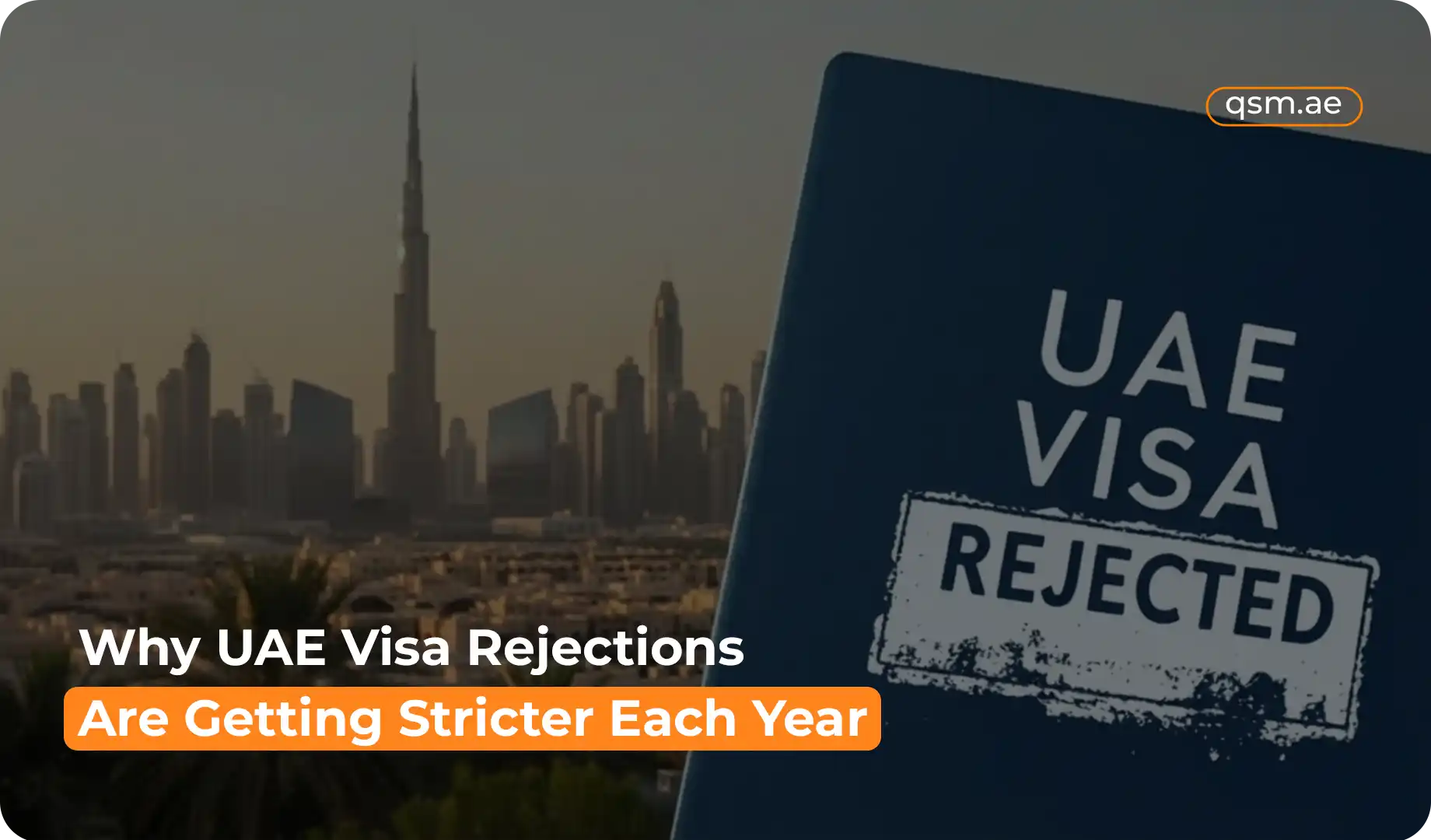
Over recent years, you may have noticed an increase in visa rejections, even for applicants who seem well-qualified.
This trend has left applicants puzzled and, in some cases, frustrated.
At QSM Document Clearing Service, we often get asked why the UAE has become tougher on visa approvals. Let’s break it down clearly and practically so you’re better prepared next time.
The Bigger Picture Behind Stricter UAE Visa Policies
1. Economic Priorities Are Evolving
The UAE has moved from a primarily oil-based economy toward diverse sectors like tourism, finance, technology, and logistics.
Each of these sectors has specific labor and skill demands. The immigration system has adapted to align with national economic strategies.
This shift means authorities must be more selective with who they allow entry for work or residency. In other words, satisfying basic eligibility is no longer enough, your profile must fit the UAE’s current economic needs.
2. Demographic Balance and Labor Market Stability
The UAE has one of the highest proportions of foreign workers in the world. While international talent fuels growth, the government also needs to manage population balance and uphold employment opportunities for UAE nationals.
Stricter vetting helps ensure that incoming talent truly fills existing gaps in the job market rather than displacing local workforce prospects.
3. Security and Global Mobility Risks
Global security concerns, including fraud, identity misuse, and illegal employment practices, have made governments more cautious.
The UAE takes border security seriously and actively screens applications against international databases. As global mobility increases, so does the risk of document fraud or misrepresentation.
This has led to deeper checks on credentials, employment offers, and supporting documentation. Accurate and verifiable paperwork is essential to avoid delays or rejection.
4. Digital Transformation of Immigration Systems
The UAE government has invested heavily in digital platforms for processing visas. While this improves efficiency, it also means countries now use algorithms and automated filters to flag inconsistencies or missing data.
Simple mistakes like incorrect dates, mismatched names, or incomplete fields can trigger rejection notifications without a human even reviewing the file. This places additional responsibility on applicants to ensure flawless documentation.
5. Changing Rules Across Visa Categories
The UAE offers many visa types, from employment, family, and student visas to golden visas for investors and skilled professionals. Each category has its own rulebook, and these are updated frequently.
Changes can be subtle and easy to overlook, such as updated salary minimums, employer sponsorship requirements, or visa validity conditions.
If applicants and sponsors aren’t aware of the latest updates, documents might be submitted under outdated criteria, leading to rejection.
Common Reasons Applications Are Refused
Understanding why a visa might be refused helps you avoid repeating the same mistakes. Some of the most frequent triggers for rejection include:
Inaccurate or Incomplete Documents
Minor errors can lead to major consequences. Incorrect dates, missed signatures, poor scans, or unsigned forms raise red flags. Authorities treat accuracy as a reflection of the application’s credibility.
Unsatisfactory Proof of Intent
For tourist, family, or residency visas, demonstrating genuine intent matters. For example, financial proof might not be strong enough, or a sponsor’s documents might not meet the required standards.
Mismatch in Employment Details
Work visas often fail when job titles, salary figures, or company credentials do not align with regulatory expectations. The UAE scrutinizes employment contracts closely to confirm they reflect real job opportunities at fair compensation rates.
Unverified Educational Certificates
Some professions require attested degrees or licenses in addition to basic documentation. If certificates are not authenticated through the proper channels, such as MFA (Ministry of Foreign Affairs) attestation, the application may be rejected.
Criminal Record or Security Flags
Background checks are standard for most visas. If an applicant’s history raises concerns, additional clearances may be required. In the absence of those, rejection becomes highly likely.
What QSM Document Clearing Service Can Do For You
At QSM Document Clearing Service, we work with individuals and businesses to reduce the chances of rejection by ensuring submission-ready documentation. Here’s how we help:
Professional Document Review
We check every page for compliance with the latest UAE visa requirements, down to the smallest detail. This includes verifying accuracy, formatting, and completeness.
Up-to-Date Regulatory Knowledge
Visa rules evolve regularly. Our team stays current with UAE immigration updates so your application meets the most recent standards at the time of submission.
Efficient Attestation and Translation Support
We coordinate with relevant authorities for attestation of educational certificates, employment letters, and other legal documents. If translations are needed, we make sure they are accurate and appropriately certified.
Sponsor and Employer Guidance
For work or family visas, we assist sponsors in preparing their side of the documentation and meeting regulatory conditions. This reduces back-and-forth and increases the likelihood of a smooth process.
Error-Free Submissions
By reviewing and correcting application errors before submission, we help avoid rejections triggered by common mistakes that often go unnoticed by applicants.
Tips If You’re Planning a UAE Visa Application
Here are smart steps to take before applying:
- Double-check every detail against the latest UAE visa checklist.
- Use certified translations if your supporting documents are in another language.
- Confirm sponsor credentials — your employer or host must be eligible under UAE immigration rules.
- Ensure financial records are up to standards for visa categories that require proof of funds.
- Avoid last-minute submissions, as rushed applications have higher error rates.
Final Thoughts
UAE visa systems aren’t harder for the sake of being difficult. They reflect the country’s broader goals, stable labor markets, secure borders, and alignment with economic planning. As application standards rise, so does the importance of getting every detail right.
If you’re planning your next visa submission and want peace of mind that your documentation is complete and compliant, the team at QSM Document Clearing Service can assist you through every stage.